
Why is there interest in cranberry products for the prevention of urinary tract infections (UTIs)?
60%
of women experience a UTI in their lifetime.1-5
50%
of those with multiple episodes have recurrences.1-5
1%
of ambulatory care visits are UTI-related.6Antibiotics are effective but contribute to growing resistance. Cranberry (Vaccinium macrocarpon)-based products, like juice, powders, and capsules, offer a promising, natural alternative mean of prevention.5

How Do Cranberries Help?
The active compounds in cranberries are thought to be proanthocyanidins (PACs), which have been shown to prevent adhesions of bacteria to the uroepithelial lining, a key step in the pathogenesis of UTIs. (Figure 2)5,7
What does the evidence say?
- 50 studies were analyzed using a Cochrane review8
- Studies found that cranberry products in general were effective in reducing the risk of UTIs.8
- Cranberry powder/tablets demonstrated significant efficacy.8
The overall risk reduction across studies and populations was 30%.8
What dose of PAC is required?
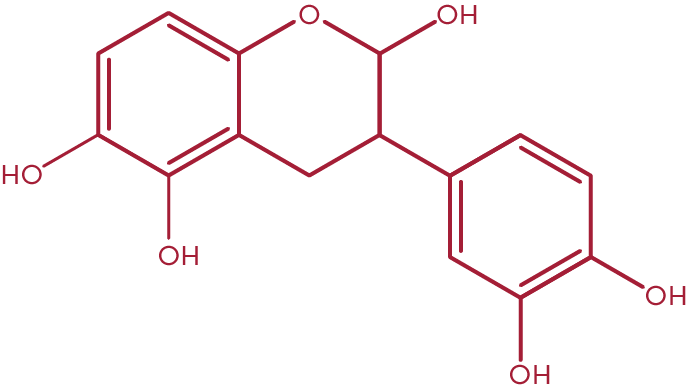
Daily intake of ≥36 mg of cranberry PACs significantly reduces the risk of UTIs.9
Doses of <36 mg have no significant impact.9
Why choose Cran d’Or™ TotalPAC?
- Premium full-spectrum organic cranberry powder
- Guaranteed 7.2% soluble and insoluble PAC content
- Our production process is fully integrated, ensuring quality from field to final product.

One 500 mg capsule of Cran d’Or™ TotalPAC delivers the 36 mg of cranberry PAC needed to prevent recurrent UTI.11
Interested in learning more? You can download the complete poster on UTIs here.
*Scientific references
- Wagenlehner F, et al. Social and economic burden of recurrent urinary tract infections and quality of life: a patient web-based study (GESPRIT). Expert Rev Pharmacoecon Outcomes Res 2018; 18:107-117.
- Foxman B. Urinary tract infection syndromes: occurrence, recurrence, bacteriology, risk factors, and disease burden. Infect Dis Clin North Am 2014; 28:1-13.
- Geerlings SE. Clinical presentations and epidemiology of urinary tract infections. Microbiol Spectr 2016; 4.
- Gupta K, Trautner BW. Diagnosis and management of recurrent urinary tract infections in nonpregnant women. BMJ 2013; 346:f3140.
- Anger J, et al. Recurrent uncomplicated urinary tract infections in women: AUA/CUA/SUFU guideline. 2019; 202:282-289.
- Schappert SM, Rechtsteiner EA. Ambulatory medical care utilization estimates for 2007. Vital Health Stat 13. 2011; 169:1-38.
- Jangid H, et al. Cranberry-derived bioactives for the prevention and treatment of urinary tract infections: antimicrobial mechanisms and global research trends in nutraceutical applications. Front Nutr 2025; 12:1502720.
- Williams G, et al. Cranberries for preventing urinary tract infections. Cochrane Database Syst Rev 2023; 4:CD001321.
- Xiong Z, et al. Preventive effect of cranberries with high dose of proanthocyanidins on urinary tract infections: a meta-analysis and systematic review. Front Nutr 2024; 11: 1422121.
- Anger JT, et al. Updates to recurrent uncomplicated urinary tract infections in women: AUA/CUA/SUFU guideline. J Urol 2022; 208:536-541.
- Nutraceuticals Fruit d’Or. The Power of Soluble and Insoluble PACs for Women’s Health Formulas. Available at: https://nutra.fruitdor.ca/sales-tools/whitepapers/the-power-of-soluble-and-insoluble-pac Accessed: May 13, 2025.
- Wagenlehner F, et al. Social and economic burden of recurrent urinary tract infections and quality of life: a patient web-based study (GESPRIT). Expert Rev Pharmacoecon Outcomes Res 2018; 18:107-117.
- Foxman B. Urinary tract infection syndromes: occurrence, recurrence, bacteriology, risk factors, and disease burden. Infect Dis Clin North Am 2014; 28:1-13.
- Geerlings SE. Clinical presentations and epidemiology of urinary tract infections. Microbiol Spectr 2016; 4.
- Gupta K, Trautner BW. Diagnosis and management of recurrent urinary tract infections in nonpregnant women. BMJ 2013; 346:f3140.
- Anger J, et al. Recurrent uncomplicated urinary tract infections in women: AUA/CUA/SUFU guideline. 2019; 202:282-289.
- Schappert SM, Rechtsteiner EA. Ambulatory medical care utilization estimates for 2007. Vital Health Stat 13. 2011; 169:1-38.
- Jangid H, et al. Cranberry-derived bioactives for the prevention and treatment of urinary tract infections: antimicrobial mechanisms and global research trends in nutraceutical applications. Front Nutr 2025; 12:1502720.
- Williams G, et al. Cranberries for preventing urinary tract infections. Cochrane Database Syst Rev 2023; 4:CD001321.
- Xiong Z, et al. Preventive effect of cranberries with high dose of proanthocyanidins on urinary tract infections: a meta-analysis and systematic review. Front Nutr 2024; 11: 1422121.
- Anger JT, et al. Updates to recurrent uncomplicated urinary tract infections in women: AUA/CUA/SUFU guideline. J Urol 2022; 208:536-541.
- Nutraceuticals Fruit d’Or. The Power of Soluble and Insoluble PACs for Women’s Health Formulas. Available at: https://nutra.fruitdor.ca/sales-tools/whitepapers/the-power-of-soluble-and-insoluble-pac Accessed: May 13, 2025.